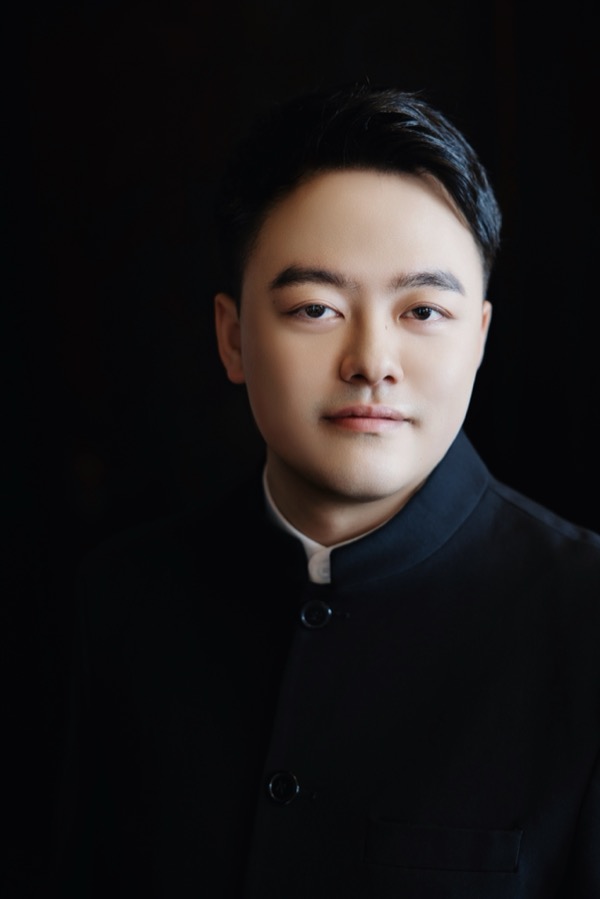
Dongxia Wu

Assistant Professor, MBZUAI
Division of Computing and Mathematical Sciences
ATLAS Lab — AI for Trustworthy Learning And Science
Trustworthy, world-grounded AI for scientific discovery.
Dongxia [dot] Wu [at] mbzuai [dot] ac [dot] ae
I am a tenure-track Assistant Professor at MBZUAI, in the Division of Computing and Mathematical Sciences, where I lead the ATLAS Lab (AI for Trustworthy Learning And Science).
Previously, I was a postdoctoral scholar at Stanford University, working with Prof. Emily B. Fox. I received my Ph.D. in Computer Science from UC San Diego in 2025, advised by Prof. Rose Yu and Prof. Yi-An Ma, and my B.S. in Applied Mathematics, Physics, and Computer Science from UW–Madison in 2020.
My research builds trustworthy AI — calibrated, auditable, and physics-grounded models — and applies it to AI for science, from molecular and cellular biology to the spatiotemporal dynamics of the physical world (toward scientific world models).
Prospective Students
The ATLAS Lab at MBZUAI is recruiting! I am looking for highly motivated PhD students, master’s students, postdocs, research assistants (RAs), and visiting students, and I recruit from the Division of Computing and Mathematical Sciences.
Starting Fall 2027
PhD students
Open now
Master's students, postdocs, RAs, and visiting students
Flexible start dates.
Research areas
I am especially interested in candidates working across these areas:
- Generative Modeling & Reinforcement Learning Diffusion- and flow-based generative models and reinforcement learning — core building blocks of modern machine learning.
- Foundation Models & Agents Large language and vision–language models (LLMs/VLMs), multimodal reasoning, and agentic systems for science.
- Probabilistic Machine Learning Bayesian inference, uncertainty quantification, sequential decision-making, and experimental design.
- AI for Biology & Science Molecular, protein, and material design; single-cell modeling; biomedical imaging; time-series modeling; and spatiotemporal modeling (e.g., fluid dynamics, climate).
How to apply
If you would like to work with me, please email your CV, academic transcript, and a brief research statement to Dongxia [dot] Wu [at] mbzuai [dot] ac [dot] ae, using the subject line [Your Name] — [Position] — [Research Direction(s)] — ATLAS Lab Application. In your email, please note which research direction(s) above best match your interests and why.
Specific opportunities
Postdoctoral Researcher — Virtual Cell Modeling Now hiring
Co-advised by Prof. Dongxia Wu and Prof. Le Song, this postdoc will build foundation-model approaches to virtual cell modeling.
Research directions
- Multiscale and multimodal cell foundation models.
- A unified cell world model for understanding, predicting, simulating, and programming biology.
- Trustworthy, mechanistically grounded modeling from a systems-biology perspective — ensuring cell perturbations respect mechanistic constraints (biological correctness).
What we offer
- Co-advising by Prof. Dongxia Wu and Prof. Le Song.
- Ample GPU resources to train foundation models.
- Collaboration with GenBio AI and the Stanford Institute for Human-Centered AI.
- Competitive salary and benefits.
Responsibilities
- Develop novel AI and ML methodologies.
- Conduct interdisciplinary research with collaborators in academia and industry.
- Publish at leading conferences and journals.
- Guide junior students in their research.
Qualifications
- Ph.D. in Computer Science, Computational Biology, AI/ML, Statistics, or a closely related field.
- Strong AI-for-biology background, with a publication record at leading venues (ICML, NeurIPS, ICLR, CVPR, …) and journals (e.g., Nature-family).
- Strong collaborative, verbal, and written communication skills.
To apply, email your CV, a brief research statement, and 2 references to Dongxia [dot] Wu [at] mbzuai [dot] ac [dot] ae with the subject line Postdoc — Virtual Cell Modeling.
News
- 2026 I joined MBZUAI as a tenure-track Assistant Professor and launched the ATLAS Lab!
- 2026 The ATLAS Lab is recruiting PhD/master’s students, postdocs, RAs, and visiting students — see Prospective Students.
- 2026 We are hosting the Structured Data for Health workshop at ICML 2026 in Seoul!
- 2026 We are hosting the 2nd MMFM-BIOMED workshop at CVPR 2026 in Denver!
- 2026 Honored to receive the UC San Diego CSE Department Dissertation Award (Runner-Up) for my Ph.D. thesis.
- 2026 New paper SimulRAG: Simulator-based RAG for Grounding LLMs in Long-form Scientific QA accepted at COLM 2026.
- 2026 New paper CellFluxRL: Biologically-Constrained Virtual Cell Modeling via Reinforcement Learning accepted at ECCV 2026.
- 2026 New paper Divide and Learn: Multi-Objective Combinatorial Optimization at Scale accepted at ICML 2026.
- 2025 New paper MF-LAL: Drug Compound Generation Using Multi-Fidelity Latent Space Active Learning accepted at ICML 2025.
- 2025 I started a postdoc at Stanford University with Prof. Emily B. Fox.
- 2025 I defended my Ph.D. thesis at UC San Diego. Thanks to my advisors Prof. Rose Yu and Prof. Yi-An Ma!
Research
The ATLAS Lab (AI for Trustworthy Learning And Science) builds machine learning that is trustworthy — calibrated, auditable, and physics-grounded — and uses it to advance science, with a focus on biology and the spatiotemporal dynamics of the physical world. My research spans two intertwined thrusts:
Trustworthy AI
Calibrated, auditable, and physics-grounded models.
As AI moves into high-stakes scientific decisions, accuracy alone is not enough. Models must know what they don’t know (calibrated uncertainty), expose why they decided (auditability), and respect known physical and biological laws (physics-grounded inductive bias). I develop probabilistic and generative methods — Bayesian deep learning, uncertainty quantification, and constrained generative modeling — that turn black-box predictions into reliable, accountable decisions.
AI for Science
From molecular and cellular biology to the spatiotemporal dynamics of the world.
Scientific data are scarce, noisy, multi-fidelity, and structured across space and time. I build generative and Bayesian models that learn efficiently from such data to accelerate discovery — especially in biology, spanning molecule, protein, and material design, single-cell modeling, and biomedical imaging — and to build world models that capture how complex physical systems evolve across space and time, from fluid dynamics to the climate. I also take a data-centric view, curating open datasets and rigorous benchmarks that make progress in AI for science measurable and reproducible.
Group
Lab Members
- Research Engineer Yuliang Fan — Shanghai Jiao Tong University (M.Eng. in EECS)
- Visiting Student Hebao Zhu — Chongqing University
- Visiting Student Xinyu Xiao — University of Chinese Academy of Sciences (M.S.)
- Visiting Student Muhao Ge — Tsinghua University
- Visiting Student Yiyao Ge — The Chinese University of Hong Kong, Shenzhen (M.Phil.)
- Research Intern Yuan Tao — University of Oxford (M.Sc.)
Mentoring Experience
- 2025–present Mingyu Li — Peking University, Turing Class (Undergraduate)
- 2024–2026 Haozhou Xu — UCSD CSE M.S. (now Google SDE)
- 2023–2025 Peter Eckmann — UCSD CSE M.S. (now Stanford CS PhD)
- 2022–2025 Brooks (Ruijia) Niu — UCSD CSE M.S. (now UCSD CSE PhD)
Publications
For a full and up-to-date list, see my Google Scholar.
- Architecture-Dependent Fusion Pathways in MLLMs arXiv preprint 2026
- PerturbCellRL: Aligning Distributions and Grounding Biology via Post-Training Perturbation Generators arXiv preprint 2026
- BALAR: A Bayesian Agentic Loop for Active Reasoning arXiv preprint 2026
- Uncertainty-Aware Distribution-to-Distribution Flow Matching for Scientific Imaging arXiv preprint 2026
- Calibrating LLMs with Semantic-level Reward Conference on Neural Information Processing Systems (NeurIPS) 2026
- CellFluxRL: Biologically-Constrained Virtual Cell Modeling via Reinforcement Learning European Conference on Computer Vision (ECCV) 2026
- Divide and Learn: Multi-Objective Combinatorial Optimization at Scale International Conference on Machine Learning (ICML) 2026
- MF-LAL: Drug Compound Generation Using Multi-Fidelity Latent Space Active Learning International Conference on Machine Learning (ICML) 2025
- Diffusion Models as Constrained Samplers for Optimization with Unknown Constraints International Conference on Artificial Intelligence and Statistics (AISTATS) 2025
- Learning Granger Causality from Instance-wise Self-attentive Hawkes Processes International Conference on Artificial Intelligence and Statistics (AISTATS) 2024
- Multi-Fidelity Residual Neural Processes for Scalable Surrogate Modeling International Conference on Machine Learning (ICML) 2024
- Diff-BBO: Diffusion-Based Inverse Modeling for Black-Box Optimization NeurIPS Workshop on Bayesian Decision-making and Uncertainty 2024
- Functional-level Uncertainty Quantification for Calibrated Fine-tuning on LLMs NeurIPS Workshop on Statistical Foundations of LLMs and Foundation Models 2024
- GLEAM-AI: Neural Surrogate for Accelerated Epidemic Analytics and Forecasting NeurIPS Workshop on Bayesian Decision-making and Uncertainty 2024
- Disentangled Multi-Fidelity Deep Bayesian Active Learning International Conference on Machine Learning (ICML) 2023
- Deep Bayesian Active Learning for Accelerating Stochastic Simulation ACM SIGKDD Conference on Knowledge Discovery and Data Mining (KDD) 2023
- Multi-Fidelity Hierarchical Neural Processes ACM SIGKDD Conference on Knowledge Discovery and Data Mining (KDD) 2022
- DeepViFi: Detecting Oncoviral Infections in Cancer Genomes Using Transformers ACM Conference on Bioinformatics, Computational Biology and Health Informatics (BCB) 2022
- Evaluation of Individual and Ensemble Probabilistic Forecasts of COVID-19 Mortality in the United States Proceedings of the National Academy of Sciences (PNAS) 2022
- Quantifying Uncertainty in Deep Spatiotemporal Forecasting ACM SIGKDD Conference on Knowledge Discovery and Data Mining (KDD) 2021
- DeepGLEAM: A Hybrid Mechanistic and Deep Learning Model for COVID-19 Forecasting arXiv preprint 2021
- A Deep Learning Based Automatic Defect Analysis Framework for In-situ TEM Ion Irradiations Computational Materials Science 2021
- Multi-Defect Detection and Analysis of Electron Microscopy Images with Deep Learning Computational Materials Science 2021